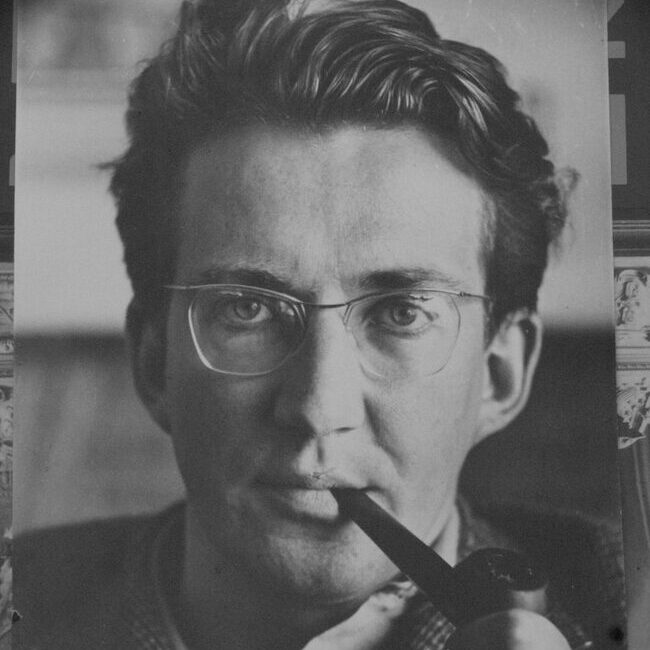
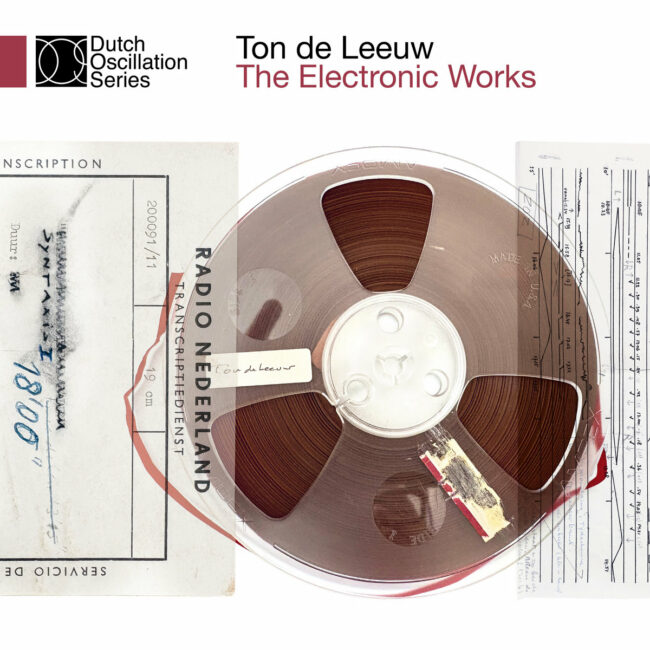
Ton de Leeuw (Rotterdam, 16 November 1926 – Paris, 31 May 1996) was a composer of a highly varied, groundbreaking, and rich musical oeuvre, as well as an influential thinker, teacher, and writer with a distinctly cosmopolitan outlook.
After studying wih Henk Badings, Olivier Messiaen, and the ethnomusicologist Jaap Kunst, he worked for several years as a music producer at the Netherlands Radio Union. From 1959 to 1986, he taught composition and electronic music at the Amsterdam Conservatory of Music, of which he was director for several years. He was also a senior lecturer at the University of Amsterdam from 1962 to 1982.
His book “Muziek van de twintigste eeuw”, first published in Dutch in 1964 and translated into English as Music of the Twentieth Century in 2005, with an essay by the composer from 1995, is still regarded as an important work.
His deep interest in what was then called non-Western music led him to travel all over the world, notably to India, Japan, and Indonesia, experiences that became a major spiritual and musical influence on his work. In turn, he inspired many listeners, students, scholars, and composers around the globe through his research, lectures at international conferences, several of which he (co-)organized, publications, radio programs, and teaching.
He wrote approximately 160 compositions, spanning the full range from solo pieces to complete operas, including innovative electronic works. It is the vocal and, more specifically, the choral compositions that reveal most clearly what he was devoted to: a conjunction of the essence of past and present, a resonance between Eastern and Western thought derived from what he perceived as their common source, expressed in a unique, personal, and at the same time transpersonal manner.
Rokus de Groot
More info here